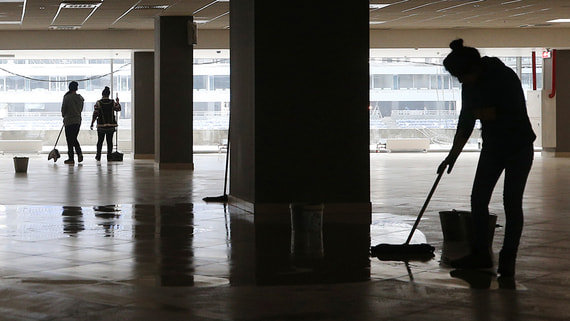
Representatives of Russia’s cleaning services industry have put forward a proposal to establish a dedicated tax regime specifically designed for their sector. The initiative aims to bring a significant portion of the market out of the shadows and into the formal economy, addressing long-standing concerns about tax evasion and labor law violations that have plagued the industry for years. One of the primary models under consideration involves implementing a unified tax system similar to the automated simplified taxation system, known as autoUSN in Russia, which would streamline compliance and reduce the administrative burden on cleaning companies.
The cleaning services market in Russia has experienced substantial growth over the past decade, driven by increasing demand from commercial real estate, retail chains, healthcare facilities, and residential complexes. However, industry experts estimate that a significant portion of this market operates in the gray zone, with companies using various schemes to minimize their tax obligations and avoid paying full social contributions for their workers. This shadow economy creates unfair competition for legitimate businesses that fully comply with tax regulations and labor laws.
The Scale of the Problem and Industry Challenges
According to industry associations, the Russian cleaning services market is valued at hundreds of billions of rubles annually, yet a substantial share of these revenues never reaches government coffers. Many cleaning companies operate using informal labor arrangements, paying workers in cash and failing to register them officially. This practice not only deprives the state of tax revenue but also leaves workers without social protections, including pension contributions, health insurance, and unemployment benefits. The problem has persisted despite periodic crackdowns by tax authorities, prompting industry leaders to seek a systemic solution.
The proposed special tax regime would address these issues by creating a simplified and transparent framework that makes compliance more attractive than evasion. By reducing the overall tax burden and administrative complexity, proponents argue that more companies would be incentivized to operate legally. The autoUSN model, which was introduced in 2022 as a pilot program in several Russian regions, automatically calculates taxes based on banking transactions, eliminating much of the paperwork traditionally associated with tax compliance. Adapting this approach for the cleaning industry could provide similar benefits while accounting for sector-specific characteristics.
Historical Context and Regulatory Framework
Russia has experimented with various specialized tax regimes over the years to address challenges in different economic sectors. The introduction of the self-employment tax in 2019, which offers a simplified 4-6% rate for individual service providers, successfully brought millions of Russians into the formal economy. Similarly, the agricultural sector benefits from the unified agricultural tax, which provides favorable conditions for farmers and food producers. These precedents suggest that targeted tax policies can effectively reduce shadow economic activity when properly designed and implemented.
The cleaning industry’s proposal comes at a time when Russian authorities are intensifying efforts to combat tax evasion and increase budget revenues. The Federal Tax Service has deployed advanced digital tools and artificial intelligence to identify suspicious transactions and non-compliant businesses. In this environment, industry leaders recognize that proactive engagement with regulators may yield more favorable outcomes than waiting for stricter enforcement measures. The proposal also reflects growing recognition among business associations that a level playing field benefits all legitimate market participants in the long term.
Potential Impact and Future Outlook
If implemented, the special tax regime for cleaning services could serve as a model for other labor-intensive industries facing similar challenges with informal employment and tax evasion. Sectors such as construction, agriculture, and personal services have long struggled with comparable issues and could potentially benefit from adapted versions of such a framework. The success of this initiative would depend on careful calibration of tax rates, clear enforcement mechanisms, and effective communication to ensure industry-wide adoption.
Industry representatives emphasize that their proposal is not merely about reducing taxes but about creating sustainable conditions for legitimate business development. They argue that bringing the market into the open would improve service quality, protect workers’ rights, and ultimately benefit consumers who would have greater recourse in case of disputes. Government officials have reportedly expressed interest in the proposal, though formal negotiations are still in early stages. The coming months will likely see intensive discussions between business associations, tax authorities, and legislators to determine whether this innovative approach can achieve its ambitious goals of transforming one of Russia’s most challenging sectors.
Expert Opinion: The cleaning industry’s tax reform proposal represents a pragmatic approach to a persistent problem that enforcement alone has failed to solve. If authorities adopt a carefully balanced special regime, we could see 30-40% of the shadow market formalize within three to five years, generating significant additional revenue while improving labor conditions. However, success will ultimately depend on setting tax rates low enough to discourage evasion while maintaining sufficient oversight to prevent abuse of the new system.