PlayStation Console Generations: From PS1 to PS5
A concise lineage of PlayStation home consoles from PS1 to PS5: launch years, the hardware ideas behind each, and what every generation changed for players.
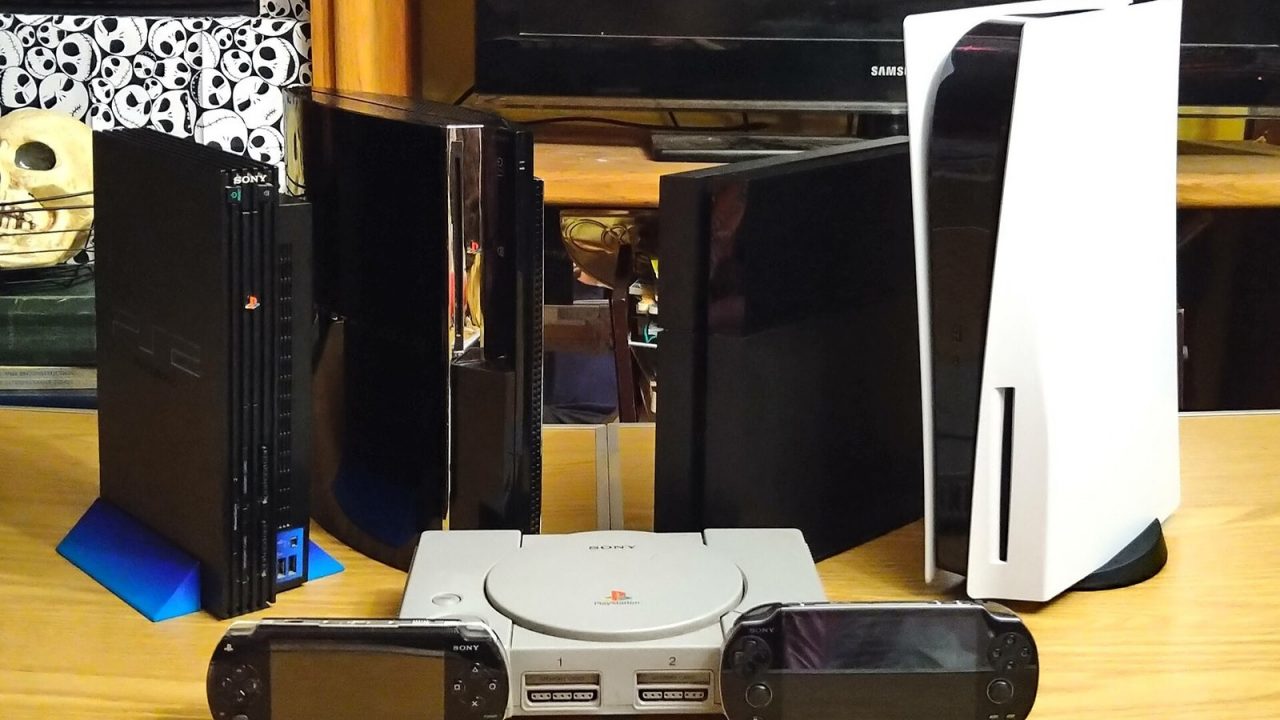
Five home consoles, roughly three decades and well over half a billion machines sold: the PlayStation line is one of the longest-running hardware families in gaming. Each generation arrived with a signature idea, whether a disc format, a controller feature or a new kind of storage, and most of those ideas are still visible on the PS5 today. This overview follows the family from the first PlayStation in 1994 to the current PS5, focusing on what each console introduced and why it mattered to people actually playing on it.
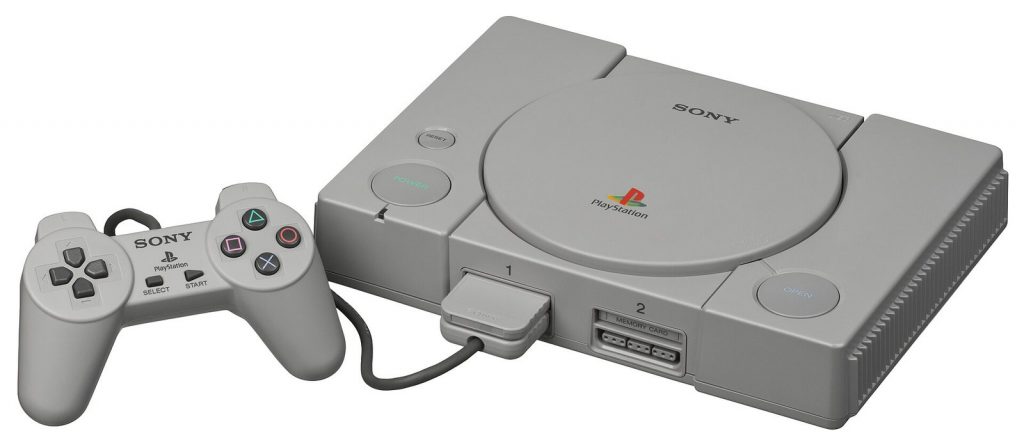
PlayStation (PS1): Betting on the CD-ROM
The original PlayStation launched in Japan on December 3, 1994, then in North America on September 9, 1995, and in Europe later that month. It was Sony’s first home console, and it arrived in a market dominated by cartridge-based machines.
Signature idea: CD-ROM games
Cartridges were fast to load but expensive to manufacture and limited in capacity. The PlayStation used CD-ROMs, which could hold far more data and were cheaper to press. That capacity made room for full-motion video, recorded music and voice acting, and the lower production cost made it easier for publishers to take risks. The trade-off was loading times, which became a familiar part of the era.
Signature idea: analog control and the DualShock
The launch controller was purely digital. Sony added analog sticks with the Dual Analog Controller and then, in 1997, released the DualShock, which combined two analog sticks with built-in vibration. The basic layout of the DualShock, with its twin sticks and shoulder buttons, has been the template for every PlayStation controller since.
What it changed
The PS1 made 3D games mainstream for a broad audience and helped turn video games into a mass-market adult hobby. Sony’s official history puts lifetime sales at over 102 million units. A smaller redesign, the PS one, followed in 2000.
PlayStation 2: The Living-Room Media Hub
The PS2 launched in Japan on March 4, 2000, in North America in October 2000 and in Europe in November 2000. It went on to become the best-selling PlayStation ever and one of the best-selling consoles of all time; Sony’s official history page now lists it at over 160 million units.
Signature idea: DVD playback and backward compatibility
The PS2 used DVD as its main game format and could play DVD movies out of the box. At a time when standalone DVD players were still relatively new, that made the console a natural fit for the living room. It also played almost the entire PS1 library, which gave new owners an instant back catalog and set an early precedent for PlayStation backward compatibility.
Signature idea: online play and expandability
Online play on PS2 depended on a network adapter for the original model, and each publisher ran its own servers. A slimline PS2 released in 2004 built the network port in. Online play was not yet a unified service, but it pointed the way to PlayStation Network.
What it changed
The PS2’s long life, with new games appearing for years after its successor arrived, showed how a huge installed base could keep a platform alive. It also cemented the DualShock 2, which added pressure-sensitive face buttons, as the standard controller design.
PlayStation 3: Blu-ray, Cell and a Connected Console
The PS3 launched in Japan on November 11, 2006, in North America on November 17, 2006, and in Europe in March 2007. It was the most technically ambitious and, at first, the most difficult PlayStation generation.
Signature idea: the Cell processor
The PS3 used the Cell Broadband Engine, a processor co-developed by Sony, Toshiba and IBM with one main core and several specialized co-processors. It was powerful but unusual, and developers needed time to learn how to get the most out of it. Later in the generation, Sony’s own studios produced some of the best-looking games of the era on it, but early multiplatform games often ran better elsewhere.
Signature idea: Blu-ray and a built-in hard drive
Every PS3 had a Blu-ray drive and an internal hard drive, both significant at the time. Blu-ray gave games much more space, and the PS3 became one of the most common Blu-ray players in homes.
Signature idea: PlayStation Network
The PS3 launched with PlayStation Network, giving every player a single account, an online store and free online multiplayer. Trophies arrived in 2008, and the PlayStation Plus subscription launched in 2010, initially as an optional service with discounts and free monthly games. Online play stayed free on PS3.
What it changed
Early PS3 models could play PS2 games, but Sony removed that feature in later revisions to cut costs. Slim (2009) and Super Slim (2012) redesigns followed. Sony’s official figure for PS3 sales is over 87 million units.
PlayStation 4: Built for Developers and Sharing
The PS4 launched in North America on November 15, 2013, in Europe later that month and in Japan in February 2014. Where the PS3 had been exotic, the PS4 was deliberately approachable.
Signature idea: PC-like architecture
The PS4 used an AMD x86 processor and graphics on a single chip with 8GB of unified GDDR5 memory. That design was far easier for developers to work with, and it made multiplatform releases more consistent. It also meant PS3 discs no longer played, because the architectures were incompatible.
Signature idea: the Share button
The DualShock 4 added a touchpad, a light bar and a dedicated Share button. The console continuously recorded recent gameplay, so pressing Share let players save clips, take screenshots or start a live broadcast. Sharing gameplay had been possible before, but making it a single button on every controller changed how people talked about games online.
Signature idea: mid-generation upgrades
In 2016 Sony released a slimmer PS4 and the PS4 Pro, a more powerful model that could output higher resolutions on 4K TVs. It was the first time PlayStation offered a performance upgrade within a generation, and the idea returned with the PS5 Pro.
What it changed
The PS4 also made PlayStation Plus required for most online multiplayer, a change that brought PlayStation in line with how Xbox Live Gold worked. Sony’s official history lists PS4 sales at over 117 million units, making it the second-best-selling PlayStation home console.
PlayStation 5: Speed and Feel
The PS5 launched on November 12, 2020, in North America, Japan and several other markets, and on November 19 in most other regions, in the middle of the COVID-19 pandemic and a global chip shortage. It was hard to find for its first couple of years.
Signature idea: the custom SSD
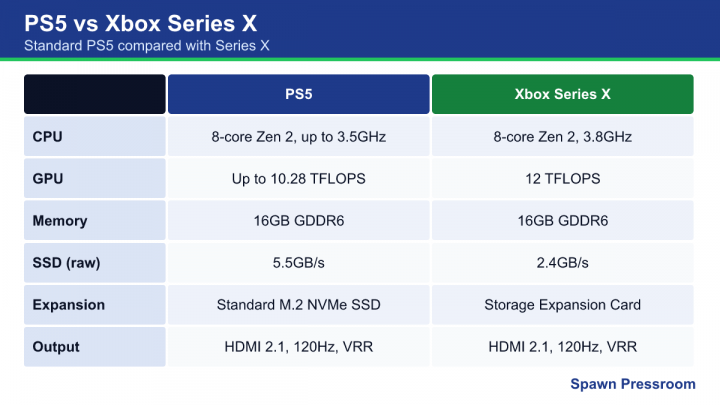
The PS5’s headline hardware feature is its custom high-speed SSD with a dedicated decompression system. Loading times shrank from minutes to seconds in many games, and developers could stream detailed worlds quickly. The SSD also enabled features such as Activities, which jump directly into specific parts of a game.
Signature idea: the DualSense
The DualSense controller introduced haptic feedback and adaptive triggers that can change resistance. The Share button became the Create button, and a built-in microphone was added.
Signature idea: backward compatibility at launch
The PS5 plays the overwhelming majority of PS4 games, many with improved performance through Game Boost. Older PlayStation generations are not playable from disc but are offered through the PlayStation Plus Classics catalog.
Models and sales
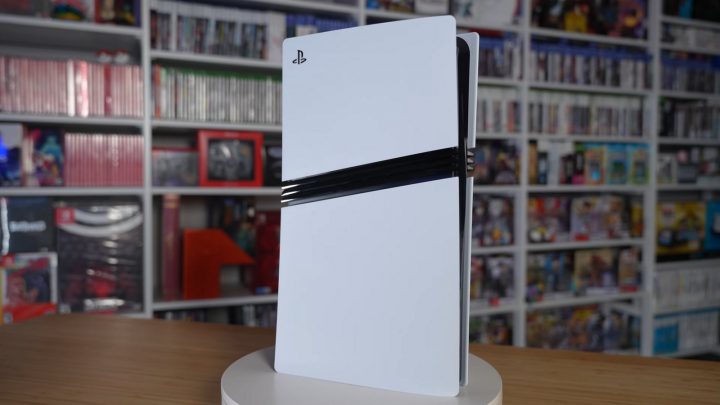
The PS5 has come in launch, Slim and Pro forms, with disc and Digital Edition variants; our guide to every PS5 model covers the details. According to Sony’s earnings reports, cumulative PS5 shipments passed 95 million units as of June 30, 2026.
The Lineage at a Glance
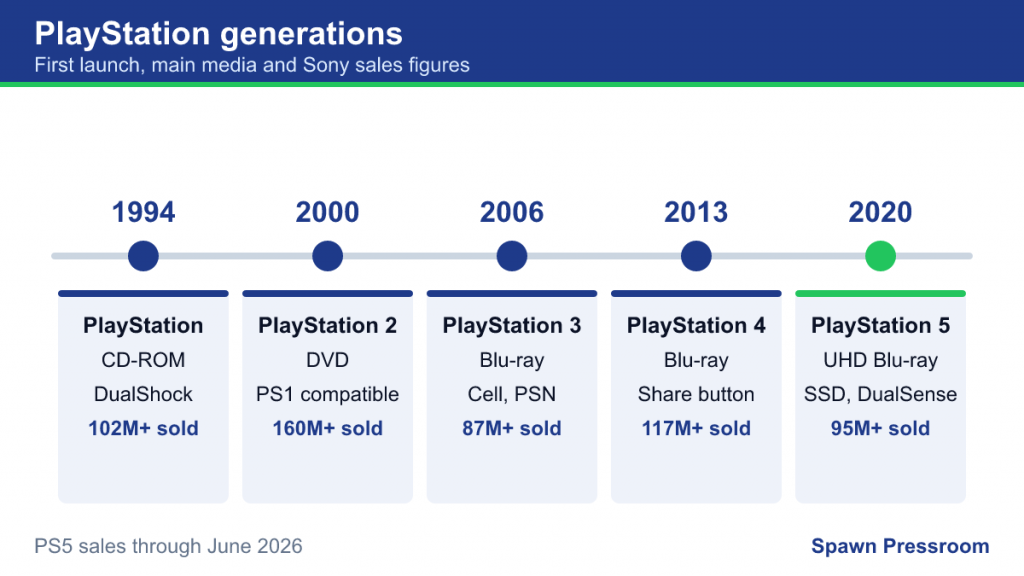
| Console | First launch | Main game media | Headline idea | Official sales (Sony) |
|---|---|---|---|---|
| PlayStation | Dec 1994 (Japan) | CD-ROM | 3D games on cheap, high-capacity discs; DualShock | Over 102 million |
| PlayStation 2 | Mar 2000 (Japan) | DVD | DVD playback; PS1 compatibility | Over 160 million |
| PlayStation 3 | Nov 2006 (Japan) | Blu-ray | Cell processor; PlayStation Network; Trophies | Over 87 million |
| PlayStation 4 | Nov 2013 (North America) | Blu-ray | Developer-friendly design; Share button; PS4 Pro | Over 117 million |
| PlayStation 5 | Nov 2020 | Ultra HD Blu-ray / digital | Custom SSD; DualSense haptics | Over 95 million (through June 2026) |
Recurring Threads Across Generations
Looking across all five consoles, a few themes keep returning:
- The disc as a living-room format. CD, DVD and Blu-ray each arrived on PlayStation early in their lives, and each gave the console a second job as a media player.
- Evolution, not reinvention, of the controller. The DualShock layout of 1997 is still recognizable in the DualSense.
- Revisions and redesigns. Every generation had at least one smaller or cheaper-to-make model; PS4 and PS5 added Pro models.
- A changing approach to backward compatibility. Broad on PS2, partial and then removed on PS3, absent on PS4, and strong for the previous generation on PS5.
- Online services growing in importance. From a PS2 network adapter to PSN, Trophies and a multi-tier PlayStation Plus.
Common Misunderstandings
- “PS5 plays every old PlayStation disc.” It plays PS4 discs (with a disc drive), not PS3, PS2 or PS1 discs.
- “PlayStation Plus always existed for online play.” Online multiplayer was free on PS3; the requirement started with PS4.
- “The Share button was the first way to record gameplay.” Capture cards and PC tools existed before, but the PS4 made capture a built-in, one-button feature.
- “Next generation is confirmed.” As of October 2026, Sony has not officially announced or dated a successor to the PS5.