
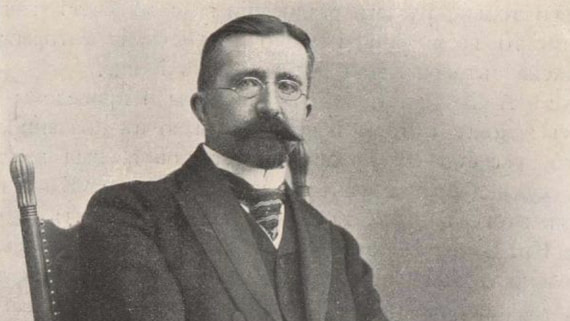
One hundred and sixty years ago, on a spring day in 1866, a man was born who would become the most influential banker in pre-revolutionary Russia. Alexei Ivanovich Putilov’s life story reads like a chronicle of Imperial Russia’s dramatic transformation from an agrarian empire into an industrializing power, and his eventual fate reflects the violent upheavals that would consume the nation. His career trajectory—from government bureaucrat to financial titan to émigré—encapsulates the hopes, achievements, and ultimate tragedy of Russia’s capitalist class during one of history’s most turbulent periods.
Born into a noble family with deep roots in Russian public service, Putilov received an education befitting his station. He graduated from the prestigious Imperial School of Jurisprudence in St. Petersburg, an institution that produced many of Russia’s finest administrators and legal minds. This educational background would prove instrumental in his early career, as he entered government service with both the social connections and intellectual preparation necessary for advancement in the complex world of tsarist bureaucracy.
Rise Through the Ranks of Imperial Finance
Putilov’s government career began in the Ministry of Finance, where he quickly distinguished himself as a capable administrator with an exceptional understanding of economic matters. During the 1890s and early 1900s, he served under the legendary Finance Minister Sergei Witte, the architect of Russia’s industrial modernization program. This period was transformative for the Russian economy, as Witte implemented policies designed to attract foreign investment, develop heavy industry, and construct the Trans-Siberian Railway. Working within this dynamic environment, Putilov gained invaluable experience in managing large-scale financial operations and understanding the intricate relationships between government policy and private enterprise.
By 1905, Putilov had risen to become the director of the General Office of the Ministry of Finance, one of the most powerful positions in the imperial financial apparatus. However, the revolutionary turmoil of that year, which saw widespread strikes, peasant uprisings, and the creation of Russia’s first parliament, prompted him to reconsider his career path. Like many talented administrators of his generation, he recognized that the private sector offered opportunities for wealth and influence that government service could never match. The following years would see him transition from public servant to private banker with remarkable success.
Building a Financial Empire
In 1910, Putilov assumed the chairmanship of the Russo-Asiatic Bank, then one of the largest financial institutions in the Russian Empire. Under his leadership, the bank expanded dramatically, financing major industrial enterprises and playing a crucial role in Russia’s continued economic development. The Russo-Asiatic Bank had extensive operations throughout the empire and maintained important connections with French financial institutions, reflecting the close economic ties between Russia and France during this period. Putilov’s network of influence extended far beyond banking proper; he served on the boards of numerous industrial companies and became a central figure in the complex web of relationships linking Russian industry, finance, and government.
His business interests were particularly strong in heavy industry, including the famous Putilov Works in St. Petersburg—coincidentally bearing the same name, though founded by a different Putilov family member decades earlier. This massive factory complex, which produced everything from railway equipment to artillery, employed tens of thousands of workers and would later become a center of revolutionary activity. The interconnection between finance and industry that Putilov represented was characteristic of Russian capitalism during its brief flowering in the early twentieth century, when a relatively small group of entrepreneurs and bankers wielded enormous economic power.
Revolution, Exile, and Legacy
The Bolshevik Revolution of October 1917 brought Putilov’s Russian career to an abrupt end. Like thousands of other members of the business and professional classes, he was forced to flee as the new Soviet government nationalized banks, factories, and private property. Putilov made his way to Paris, which became home to the largest Russian émigré community in the world during the interwar period. There, he joined fellow exiles in attempting to preserve elements of pre-revolutionary Russian culture and, for many years, hoping for an eventual return to their homeland.
In emigration, Putilov continued to work in banking, though on a far more modest scale than during his imperial heyday. He passed away in Paris in 1940, having lived long enough to witness the outbreak of another devastating war but not the ultimate fate of the Soviet system that had displaced him. His life story illustrates both the remarkable opportunities available to talented individuals during Russia’s capitalist period and the fragility of the economic and social structures they built. Today, historians studying Russian economic development continue to examine figures like Putilov to understand how a backward agrarian empire rapidly industrialized—and why that transformation ultimately failed to produce a stable capitalist society.
Expert Opinion: Alexei Putilov’s trajectory from ministerial bureaucrat to banking magnate exemplifies the unique characteristics of Russian capitalism, where success depended heavily on navigating the intersection of state power and private enterprise. His story serves as a cautionary tale about the vulnerability of economic elites who fail to address underlying social tensions, as Russia’s rapid industrialization created wealth without adequately distributing its benefits. Modern scholars increasingly view figures like Putilov not merely as victims of revolutionary violence, but as representatives of a system whose internal contradictions made some form of dramatic transformation almost inevitable.